
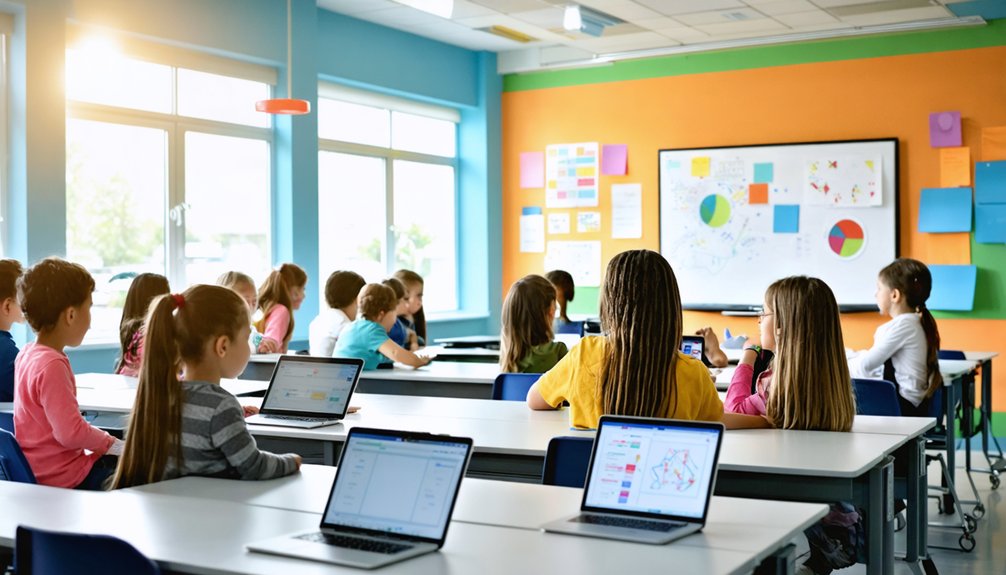

To maximize blended learning models, educators should establish a balanced approach that integrates online components with face-to-face instruction. Engaging diverse learning styles through multimodal materials is essential. Continuous feedback from both formative and summative assessments supports student progress and understanding. Providing sturdy support for both learners and educators promotes a collaborative environment. By addressing technological barriers and regularly monitoring learning progress, educators can guarantee effective implementation. More perspectives on optimizing these strategies await exploration.
Highlights
- Design courses that seamlessly integrate online and in-person activities to enhance engagement and cater to diverse learning styles.
- Utilize adaptive learning technologies and tools to provide personalized learning paths and timely feedback to students.
- Encourage active communication among students, educators, and families to foster collaboration and support in the learning process.
- Implement regular formative assessments to monitor progress and adjust instructional strategies based on student performance data.
- Offer ongoing professional development for educators to refine their skills in implementing effective blended learning practices.
Understanding Blended Learning Models
Blended learning models represent a revolutionary approach to education, merging traditional classroom experiences with online learning components. By integrating blended instruction, educators seek to enhance learning outcomes for diverse student populations. These models offer flexibility, allowing students to access digital content at their convenience while still participating in valuable in-person interactions. Varied learning styles are accommodated through engaging multimedia and personalized learning paths, fostering a sense of community among learners. Key models like the Face-to-Face Driver and Online Driver allow for customized approaches, ensuring that educational needs are met effectively. This thoughtful integration of online and face-to-face learning cultivates a collaborative environment, reinforcing the importance of social connections in education and encouraging students to plunge into their potentials, which are considered precious, and educators seek to nurture a sense of community, which promotes a culture that is specially designed to support the students. Additionally, blended learning combines online and face-to-face instruction to promote student engagement and flexibility. Furthermore, blended learning addresses skill gaps without holding back advanced students, providing opportunities for tailored learning experiences. This innovative approach leverages a combination of in-person instruction and online modules, allowing for a more comprehensive educational experience.
Establishing a Balanced Approach
A balanced approach to blended learning is essential for maximizing educational effectiveness and enhancing student engagement. Thoughtful course design plays a vital role, integrating online components with in-class activities to create a cohesive experience aligned with specific learning objectives. It is essential to weigh diverse student needs, allowing flexibility and accessibility in learning modalities. Additionally, ensuring that e-learning elements are easily accessible outside the classroom supports a vibrant environment where traditional and digital methods reinforce one another. Moreover, effective blended learning promotes a continuous learning approach that fosters deeper understanding and engagement among students. Providing immediate feedback through automatic grading tools can further enhance student understanding and motivation. Clear communication channels and timely feedback nurture a sense of belonging among students, encouraging their active participation. Ultimately, a balanced strategy not only supports organizational goals but also enhances the overall learning path, promoting student success and engagement, wherein it plays a key role.
Engaging Diverse Learning Styles
Engaging diverse learning styles is crucial for nurturing an inclusive educational environment that caters to the varied preferences and strengths of students. Blended learning can effectively address this diversity by integrating multimodal instructional materials aligned with different learning strategies. Utilizing structures such as the Felder-Silverman model reveals essential dimensions like visual-verbal and active-reflective preferences. Incorporating activities across Kolb’s learning cycle—reflective observation, abstract conceptualization, active experimentation, and concrete experience—enhances engagement by allowing students to connect personally with content. Understanding students’ learning styles can significantly improve their satisfaction and academic performance in blended learning environments. By embracing diverse instructional methods, educators can ensure that all students engage meaningfully with the subject matter.
Facilitating Continuous Feedback
Continuous feedback plays a vital role in enhancing the learning experience within blended learning environments. By integrating formative assessment throughout the instructional process, educators can provide timely feedback that substantially boosts student performance and engagement. This ongoing feedback encourages student reflection, allowing learners to identify areas for improvement promptly. Strategies such as regular online check-ins and the use of automated feedback tools in Learning Management Systems promote real-time responses and support. Additionally, incorporating peer review not only enhances individual learning but also creates a sense of community among students. Effective blended learning strategies ensure that student learning objectives are consistently aligned with the feedback provided. Moreover, implementing technology for ongoing feedback allows for more personalized learning experiences that cater to each student’s unique needs.
Supporting Educators and Learners
Successful blended learning environments thrive on resilient support systems for both educators and learners. Teacher training is critical, equipping educators with the skills to design engaging, student-centered experiences. Continuous professional development guarantees they can collaboratively plan, assess efficacy, and adapt to individual learner needs.
Additionally, providing sturdy student support encourages autonomy and self-regulation, nurturing environments where learners feel enabled. Accessible digital resources complement these efforts, enhancing interactive activities and freeing teacher time for personalized guidance. Collaboration among educators is essential, allowing for specialization and cooperation in planning and executing blended lessons. In sum, a strong support structure is crucial in cultivating a thriving blended learning experience that nurtures both educators and students alike.
Overcoming Technological Barriers
In order to promote effective blended learning environments, addressing technological barriers is imperative. Many students and educators encounter significant technological obstacles, including electricity shortages, unreliable internet connectivity, and limited access to quality devices.
These challenges contribute to digital divides that diminish engagement and participation. Moreover, lower digital literacy among students and faculty can exacerbate issues, leading to difficulties in traversing online platforms and integrating technology into teaching.
To overcome these challenges, ongoing professional development and administrative support are vital. By investing in training and ensuring access to reliable devices, institutions can enhance digital competency and promote a more inclusive learning experience. Ultimately, addressing these barriers will encourage a more empowered learning community, enabling belonging and collaboration among all participants.
Monitoring and Adjusting Learning Progress
While effective monitoring and adjustment of learning progress are crucial in blended learning environments, educators must employ a variety of assessment strategies to accurately gauge student understanding and engagement. Progress tracking through formative and summative assessments, enhanced by digital tools, allows for timely feedback and customized learning experiences.
Learning analytics enable continuous data collection, centralizing student engagement metrics for analysis. This data-driven approach identifies individuals or groups requiring academic interventions. Personalized feedback and goal setting promote student ownership of their educational path, while collaborative monitoring efforts promote transparent communication among educators, students, and families.
Conclusion
To summarize, effective implementation of blended learning models requires a thoughtful blend of technology and traditional methods customized to diverse learner needs. By promoting engagement, encouraging continuous feedback, and providing sturdy support for both educators and students, institutions can create a vibrant learning environment. Overcoming technological challenges and consistently monitoring progress guarantees that blended learning remains adaptable and effective, ultimately enhancing educational outcomes. Embracing these strategies will pave the way for a successful and enriching learning experience.
References
- https://markinstyle.co.uk/blended-learning-statistics/
- https://www.researchforaction.org/wp-content/uploads/2015/11/Blended-Learning-PERC-Research-Brief-September-2014.pdf
- https://pmc.ncbi.nlm.nih.gov/articles/PMC8493276/
- https://www.panopto.com/blog/4-models-of-blended-learning/
- https://www.digitallearninginstitute.com/blog/what-is-blended-learning-definition-benefits-models
- https://www.21kschool.com/us/blog/blended-learning/
- https://www.ispringsolutions.com/blog/blended-learning-a-primer
- https://www.teachtci.com/blog/types-of-blended-learning-models/
- https://www.educate-me.co/definitions/blended-learning
- https://www.easygenerator.com/en/blog/blended-learning/blended-learning-best-practices/