
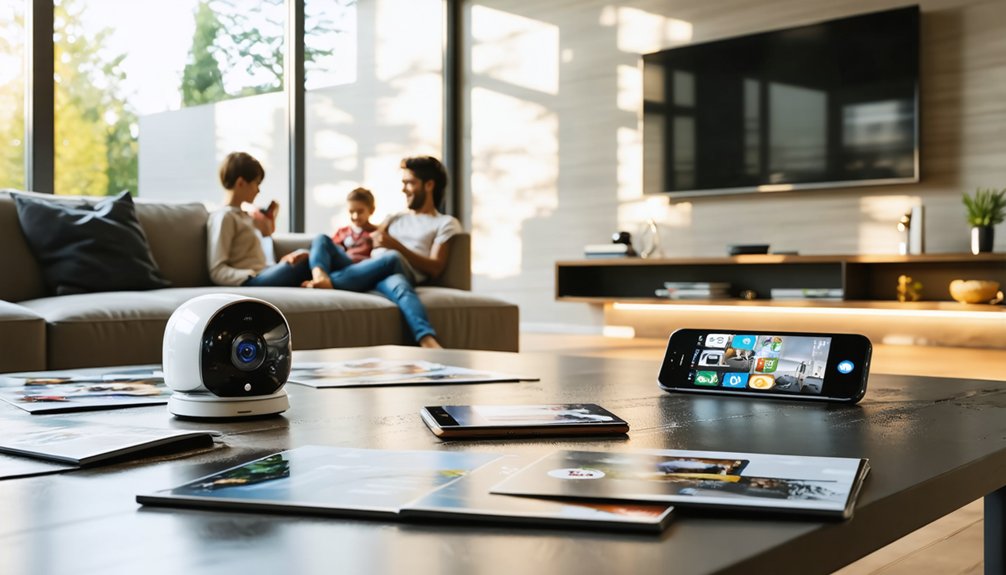

Before installing a smart security system, one should consider essential components like security cameras, motion detectors, and smart locks. Proper installation techniques for control panels and sensors are essential for maximizing effectiveness. It’s important to understand local regulations regarding surveillance and privacy, as these can affect the system’s functionality. Regular maintenance and testing are essential for ensuring reliability. To uncover further details on optimizing security setups, one can investigate additional resources on this topic.
Highlights
- Assess your home layout to determine optimal locations for security cameras, sensors, and control panels to maximize coverage and effectiveness.
- Ensure a reliable and secure Wi-Fi connection for seamless device pairing and communication throughout your smart security system.
- Familiarize yourself with federal and state regulations surrounding surveillance and privacy to ensure legal compliance and protect community trust.
- Schedule regular maintenance and testing of your system to verify functionality and keep firmware updated for prolonged security performance.
- Consider local storage solutions for your video data, enhancing privacy while minimizing risks related to online storage vulnerabilities.
Essential Components for Your Security System
A sturdy security system is built upon several essential components that work in harmony to protect homes and properties. Security cameras serve as the backbone of video surveillance, with outdoor models enduring harsh weather and indoor options providing wide-angle views of large spaces. Doorbell cameras enhance engagement through two-way communication and visitor logging. Complementing these are various sensors, including motion detectors and glass break sensors, which provide immediate alerts upon identifying threats. Smart locks introduce keyless entry controls, allowing flexible access for guests. Finally, alarm systems and environmental sensors collectively fortify home safety. Connected smart home security systems provide real-time insights and protections, enhancing overall security capabilities. Additionally, real-time video streaming from security cameras allows homeowners to monitor their property instantaneously, ensuring prompt responses to any suspicious activity. Effective system integration of these elements guarantees a cohesive defense, promoting a secure environment that nurtures a sense of belonging for families, thereby safeguarding homes through reliable provision of security features. In addition, understanding the core components of a security system ensures that property owners can customize their setup to meet specific safety needs.
Control Panel Installation Tips
Successful installation of a control panel is vital for guaranteeing the effectiveness of a security system. Ideal panel placement involves situating it centrally for sturdy communication with sensors and near main entry points for quick access in emergencies. It’s essential to select a location close to a power source while avoiding high-traffic areas, such as near sinks or appliances. Installation safety is paramount; use mounting brackets to secure the panel and guarantee it remains stable, potentially enlisting professional help if needed. Verify stable power connections and consider backup options to mitigate outages. Additionally, understanding the installation process is critical for successfully setting up any alarm system. Moreover, key components such as door and window sensors should be installed in conjunction with the control panel for comprehensive coverage. Furthermore, ensuring that devices are connected to the Wi-Fi network allows for effective control and monitoring of your entire smart home security system.
Finally, perform thorough tests after installation to confirm functionality and ease of use for all household members, guaranteeing a safe environment for everyone.
Proper Sensor Placement and Installation
Effective sensor placement and installation are essential components in creating an exhaustive security system. Proper sensor placement should focus on entry points, with motion sensors near doors and windows for maximum detection. Inside the home, positioning sensors just beyond entryways enhances early alerts. Understanding how motion sensors work can improve their effectiveness in detecting intruders.
Strategic installation considerations include mounting sensors 6 to 8 feet high in corners to eliminate blind spots. Additionally, sensors should be positioned away from heat sources and obstructions to minimize false alarms. For interior spaces, targeting hallways and areas with valuable items is pivotal. Using recessed models for concealment and complementing with glass-break sensors can improve security. Engaging professionals for customized sensor placement guarantees a sturdy defense and nurtures a sense of safety within the community. CPI’s motion sensors utilize a dual-tech approach that ensures accurate detection and reduces false alarms. Furthermore, incorporating motion sensors into smart home systems enhances overall security and convenience for homeowners.
Device Pairing and App Configuration
Having established proper sensor placement and installation as foundational elements of a resilient security system, attention now shifts to device pairing and app configuration. Smart pairing connects devices within a unified system, typically requiring a secure Wi-Fi or Bluetooth connection. This process often involves scanning a QR code or manual input, enhancing automation capabilities and remote control. Utilizing a central app, users can configure device settings, customize alerts, and establish routine automations. Pairing enables devices to communicate and carry out predefined actions which enhances the overall functionality of the security system. For ideal performance, devices should share compatible networks and encryption methods. It is also advised to pair door/window sensors first, managing names and functionality for user-friendly experience. Embracing AI assistance may further simplify device configuration, minimizing setup errors and promoting a cohesive security environment.
Comprehensive System Testing and Maintenance
While many users invest time in the initial setup of their smart security systems, ongoing exhaustive testing and maintenance are crucial to ensuring continued functionality and reliability.
Regular system testing should include manually triggering alarms and confirming video quality from surveillance cameras.
Users are encouraged to implement maintenance scheduling to check for firmware updates and battery health, including ensuring backup systems are functional.
Monthly diagnostic procedures should be conducted, keeping detailed logs of tests, issues, and corrective actions.
Additionally, verifying communication pathways, such as mobile app notifications and alarm transmissions, can prevent potential lapses in security.
Committing to these practices promotes assurance in the system’s performance, creating a strong sense of community safety and belonging, and is essential to ensuring continued functionality and reliability, which is crucial.
Considerations for Sensor Placement
Proper sensor placement is essential for maximizing the effectiveness of a smart security system. To enhance security, motion sensors should be installed in high-traffic areas like living rooms and entryways, ideally mounted 6 to 8 feet high to cover the widest field of vision.
Positioning sensors in corners and over doorways provides unobtrusive monitoring of precious items and common entry points. Careful consideration must be given to avoid heat sources and direct sunlight, which can cause false alarms. Additionally, ensuring that sensors are out of pets’ reach and free from obstructions like large furniture will optimize their performance.
Integrating these sensors with security cameras offers an exhaustive security solution, greatly improving overall safety and peace of mind.
Understanding Local Regulations and Privacy Concerns
Sensor placement plays a vital role in enhancing a smart security system’s effectiveness, but understanding local regulations and privacy concerns is equally important.
Homeowners must guarantee legal compliance with federal and state laws governing surveillance use, particularly regarding audio recordings and privacy expectations.
Video cameras are generally lawful outside private areas, but restrictions may apply to prevent neighbor infringement.
Additionally, privacy risks emerge as smart systems collect a wealth of personal data, necessitating resilient security measures, such as secure Wi-Fi networks and local storage solutions.
Transparency about surveillance practices promotes trust within the community while mitigating potential legal disputes.
Prioritizing ethical installation and usage assures adherence to regulations, ultimately enhancing communal safety without compromising privacy.
Conclusion
In summary, installing a smart security system requires careful planning and attention to detail. By understanding the essential components, ensuring proper sensor placement, and adhering to local regulations, homeowners can create a secure environment customized to their needs. Regular system testing and maintenance, coupled with effective device pairing and app configuration, enhance reliability and usability. Ultimately, a well-installed smart security system not only provides peace of mind but also adapts to the changing scenery of home security technology.
References
- https://www.alliedhomesecurity.net/news/a-guide-to-home-security-system-installation/
- https://www.blog.heykangaroo.com/blog/master-the-installation-of-your-smart-home-security-system
- https://www.yoursecurityconnection.com/smart-home-security-system-installation-guide/
- https://smarthome.calstate.aaa.com/content/install_guide/files/Quickstart-Guide.pdf
- https://a3smarthome.com/installation/
- https://cpisecurity.com/blog/smart-security-systems/
- https://reolink.com/blog/security-system-components/
- https://elite1988.com/blog/item/10-must-have-smart-home-security-system-components
- https://www.asurion.com/connect/tech-tips/everything-you-need-to-know-about-smart-home-security-systems/
- https://simplisafe.com/blog/designing-the-perfect-smart-home-security-system